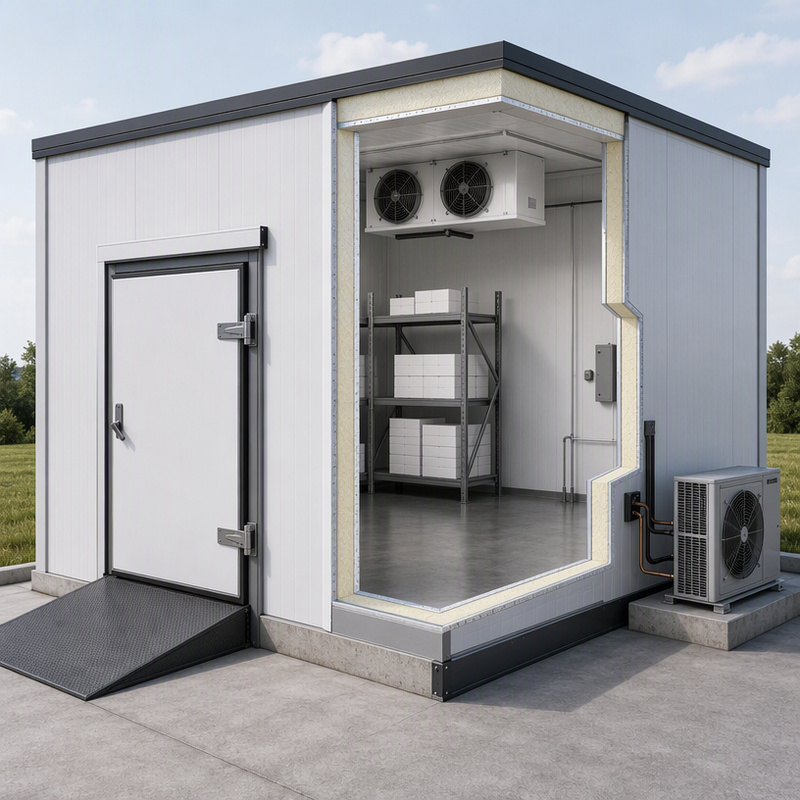
Cold Room Building: Key Specifications and Guidance

All Categories

cold room building

Cold  room buildings are specialized  structures designed to maintain low temperatures for the  storage and  preservation of perishable goods. These facilities are critical for businesses across various sectors, including food and beverage,  pharmaceuticals, and logistics.  When considering a cold  room  building,  B2B buyers  often prioritize factors such as  insulation quality, structural  integrity, customization options,  and compliance  with industry standards. This article will  guide  you through the essential specifications, selection processes, supplier  evaluation, installation guidance, and diverse applications  of  cold room buildings.
 
How to Choose the Right Cold Room Building for Your Business

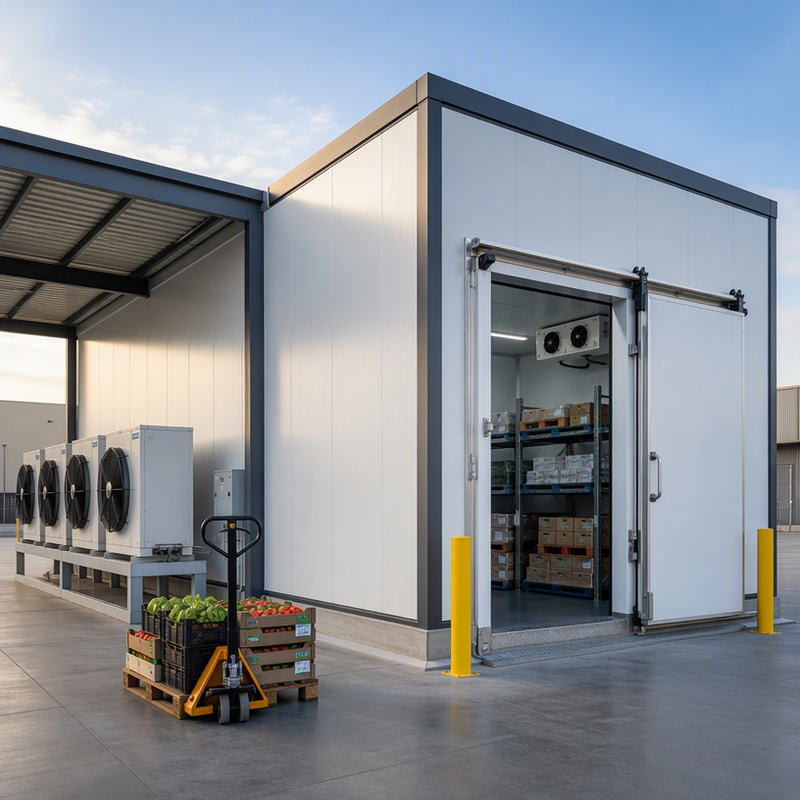
How to Choose the Right Cold Room Building for Your Business

Choosing the right cold room building involves  several steps to ensure  it meets your operational needs:


Define Your Requirements: Start by assessing the  specific requirements of your business. Consider what products you will store, the quantity, and the required temperature range. This information will guide your  selection  process.

Evaluate Customization Options: Look for suppliers that offer customization capabilities. Cold rooms can be tailored to specific dimensions, insulation types, and temperature control systems. A customized  solution  can enhance efficiency and  effectiveness.

Check Quality and Compliance: It's essential to  ensure  that the cold room complies with local regulations  and industry standards. This may include certifications related to food safety or pharmaceutical storage. Ask potential  suppliers about  their quality control processes and any certifications they hold.

Consider Future Expansion: If  your business  plans to grow, consider modular designs that allow for  easy expansion. This flexibility can save time and costs in the long run.

Supplier Reputation and Experience: Research potential suppliers, focusing on their experience in manufacturing cold  room buildings. A  reputable supplier, such as Shenyang Haibo Weiye Light Steel Color Plate  Co., Ltd, can provide valuable insights based on industry knowledge and product expertise.
Where to Find Reliable Suppliers for Cold Room Building Projects

Where to Find Reliable Suppliers for Cold Room Building Projects

Finding reliable suppliers for cold room building projects requires thorough research and evaluation:

Industry  Directories and Trade Shows: Utilize industry directories and attend trade shows to connect with manufacturers and suppliers specializing in cold room construction. These platforms allow you to  meet potential  partners face-to-face and  discuss your  requirements in detail.

Online Research: Conduct online research  using relevant keywords such  as "cold room building suppliers" or "custom cold storage solutions." Review company websites and customer testimonials to assess their reputation and service offerings.

Networking and Referrals: Leverage your professional network  to obtain referrals. Colleagues and industry contacts may recommend suppliers with whom they have  had positive experiences.

Assess Manufacturing Capabilities: Evaluate potential suppliers  based on their  manufacturing capabilities. Look  for companies equipped with  advanced production  lines  and quality control processes, like those employed by Shenyang Haibo Weiye, to  ensure high-quality  construction.

Request Quotes and Proposals: Once you have shortlisted suppliers, reach out to request detailed quotes and proposals. This will help you  compare pricing, lead times, and customization  options, facilitating a more informed  decision.

Installation Guidance for Efficient Cold Room Building Setup

Installation Guidance for Efficient Cold Room Building Setup

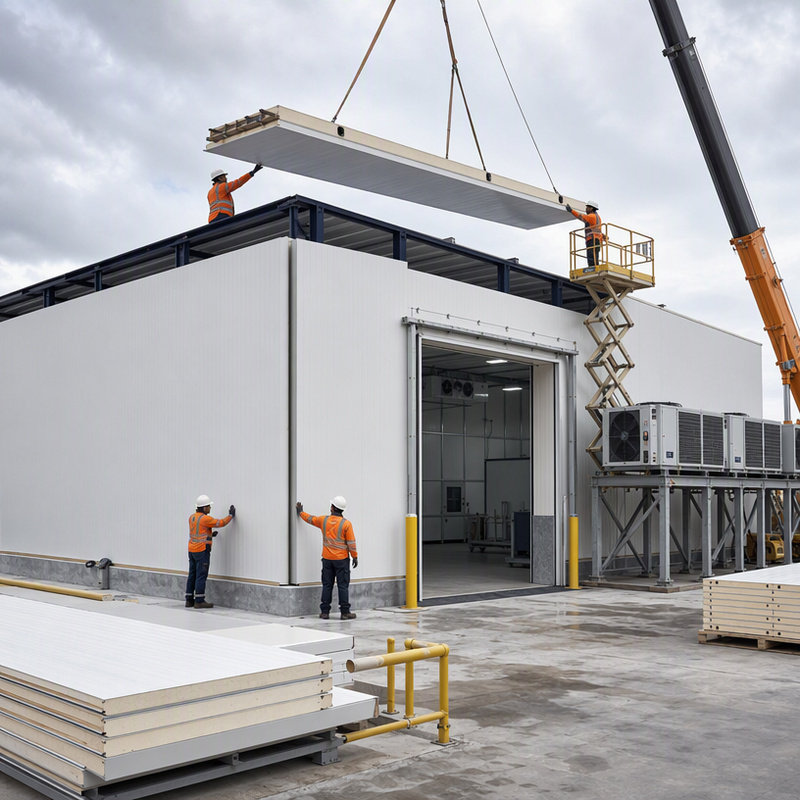
Proper installation is critical for the performance and longevity of cold room buildings. Here are some essential steps and considerations:

Site Preparation:  Ensure the installation site is prepared and meets  the specific  requirements for foundation and access. The  ground should be level  and capable of supporting the weight of the cold room and  its contents.

Assembly Process: Follow the manufacturer's  guidelines during assembly. Pay close attention to joint sealing and insulation installation, as improper  handling can lead to thermal inefficiencies and potential structural  issues.

Temperature Control Systems: Install temperature control systems, such as refrigeration units, according to the manufacturer's specifications. Ensure that these systems are properly calibrated and tested before the cold room is put into operation.

Final Inspection: Conduct a thorough final inspection before the cold  room is officially operational. Check for  any gaps  in insulation, proper sealing, and functionality of temperature control systems. This step  is crucial  to prevent  future operational issues.

Training  and Maintenance:  Train personnel on the operation and maintenance of the cold room. Regular  maintenance checks should be scheduled to ensure the integrity of the structure and  the efficiency of the temperature control systems.


Applications of Cold Room Buildings in Various Industries

Cold room buildings serve diverse applications across multiple industries. Here are some  key  sectors that benefit from these  specialized structures:

Food and Beverage  Industry:  Cold rooms are vital for storing perishable food items such as meat,  dairy  products, and vegetables. They help maintain freshness, prevent spoilage, and ensure compliance with health regulations.

Pharmaceuticals: In the pharmaceutical sector, cold rooms are used to  store temperature-sensitive medications and vaccines. Maintaining  the required temperature range is crucial to preserving the efficacy  of these products.

Logistics and Distribution: Cold storage facilities play an essential role  in logistics,  facilitating the transportation of temperature-sensitive goods. Efficient cold rooms ensure that products remain at the desired temperature throughout  the supply chain.

Floral and Horticultural: The floral industry  utilizes cold rooms to extend the shelf  life of flowers and plants. Proper temperature control helps prevent wilting and decay, ensuring that products reach customers in optimal condition.

Chemical Storage: Certain chemicals require specific temperature conditions for safe  storage. Cold rooms can  be designed to accommodate these requirements, ensuring compliance with safety regulations.

Each of these applications underscores the importance of tailored cold room solutions  that  meet the specific needs of different  industries, reinforcing the value of strategic planning and supplier collaboration.

Key Specifications for Cold Room Building Materials and Design

When selecting materials and designing a cold  room building, several key specifications must be considered to ensure optimal performance.

Insulation  Thickness: The thickness of insulation materials, typically ranging from 50mm to 150mm, significantly impacts thermal efficiency. Thicker insulation reduces energy  costs and  maintains consistent temperatures, which is crucial for preserving sensitive products.

Material Selection: Common materials for cold room construction include color steel profiled plates, polyurethane panels, and H section steel for structural elements. The choice of material affects durability, thermal performance, and overall cost. Polyurethane panels, for instance, offer superior  insulation but may  come  at a higher price point. If you are looking for high-quality options, consider our PU PIR Insulated Wall Sandwich Panel.

Sealing and Joints: Proper sealing of joints and edges  is  essential to prevent air leakage and moisture ingress. This can be achieved using high-quality gaskets and sealants. Without effective sealing, energy efficiency can  drop significantly, leading to increased operational costs.

Load-Bearing Capacity: Depending  on the intended use, the load-bearing capacity of the structural  components must  be evaluated. Cold rooms may need to  support heavy  equipment or stored goods, requiring robust design and material  choices.

Temperature Range: Determine the required  temperature range for  your cold room, as different applications  may necessitate specific conditions. For example, a cold storage facility for fresh produce might require temperatures around 0°C, while pharmaceuticals may need temperatures below freezing.

These specifications collectively influence the cold room's efficiency, reliability, and suitability for various  applications.

Frequently Asked Questions

What types of cold rooms do you design and build?

We design and build modular walk-in, blast, storage, and freezer cold rooms customized for temperature range, capacity, and site conditions using steel frame and insulated panels.
We use H-section steel, box columns, beams, steel trusses, composite insulated panels, color profiled plates and purlins manufactured on our production lines.
Yes. We tailor size, insulation, temperature control, and load capacity for food, pharmaceutical, logistics, and industrial applications.
Lead time varies by size and complexity; small units take weeks, larger engineered projects take several weeks to months. We provide schedules after design confirmation.
Yes. We offer on-site installation guidance, welding and assembly support, plus after-sales service for repairs, parts, and performance follow-up.

Get a Free Quote

Our representative will contact you soon.
Email
Name
Company Name
Message
0/1000

Related product categories

Get a Free Quote

Our representative will contact you soon.
Email
Name
Company Name
Message
0/1000