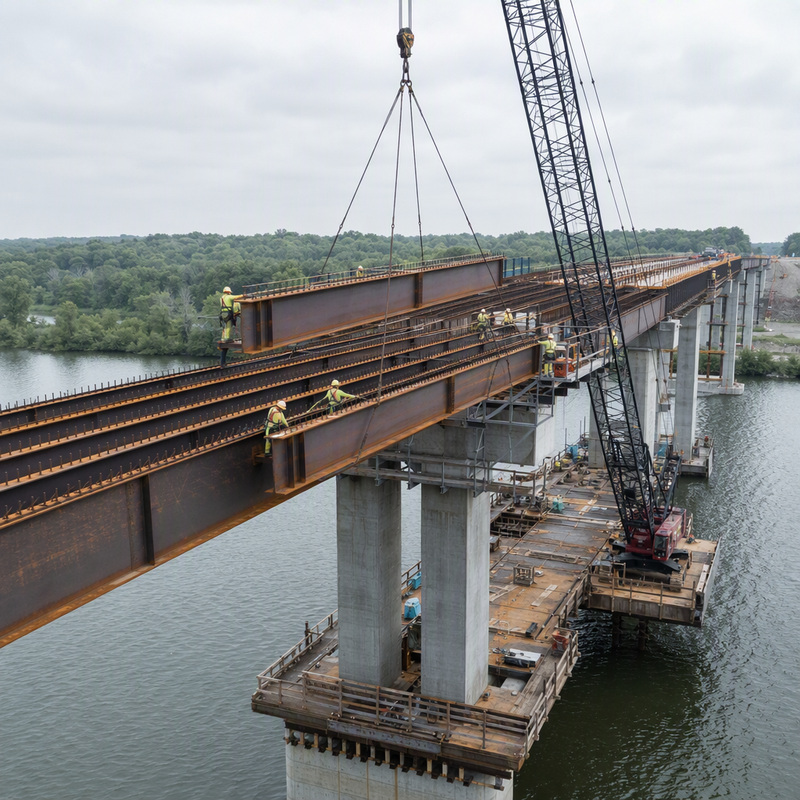
Bridge Construction Project Insights for Buyers

All Categories

bridge construction project

In the realm of construction,  a bridge construction project  represents a significant investment and  a complex undertaking  that demands careful planning and  execution. Buyers involved in  these  projects often face a myriad of concerns,  including material  quality, supplier reliability, and adherence to  specifications. This article will  provide insights into the critical  aspects of  bridge construction  projects,  helping purchasing managers and engineers  make  informed  decisions when procuring steel  components essential  for their projects. For instance, understanding the role of steel structure components can greatly influence the overall success of a bridge.
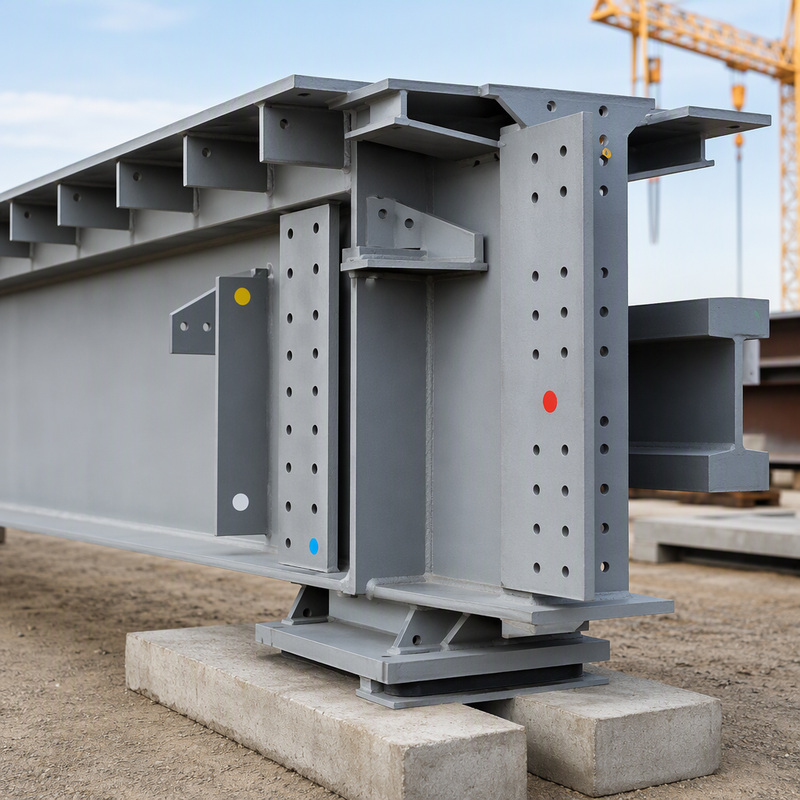
Evaluating Quality in Steel Products for Bridge Construction Projects

Evaluating Quality in Steel Products for Bridge Construction Projects

Quality  assurance is a  fundamental aspect  of sourcing steel products for bridge construction projects. Buyers should evaluate several factors to  ensure that the steel components meet  the required standards. One critical  aspect is to verify the manufacturer's production  capabilities and quality control processes.

Shenyang Haibo Weiye Light Steel Color  Plate Co., Ltd, for example, operates advanced steel structure production lines and employs stringent quality control measures.  Buyers should  inquire about the  certification processes adhered to by the manufacturer and whether  the steel products  meet national and international standards, such as ASTM or ISO certifications.

Furthermore, the manufacturing process  itself plays a  significant role in product quality. Buyers  should assess whether the steel products undergo necessary treatments, such as welding and stress testing, to  confirm structural integrity. It’s advisable to  request documentation of these processes,  including material test reports and inspection certifications, to verify that  the products will withstand the intended loads and conditions.

Common Problems in Bridge Construction and Effective Solutions

Common Problems in Bridge Construction and Effective Solutions

Bridge  construction projects can encounter a range  of challenges, from material defects to logistical issues.  One common problem is the misalignment of  components during assembly, which can arise from inaccurate manufacturing  tolerances or shipping errors. To mitigate this  risk,  buyers  should emphasize the importance of precise measurements and specifications  during the procurement phase.

Another challenge is the potential for delays in supply chain  logistics, which  can significantly impact  project timelines. To address this, buyers should establish clear  communication channels with suppliers and outline delivery schedules in advance. Additionally, considering  multiple suppliers can provide flexibility and reduce  dependency on a single source.

In some instances, issues may  arise during installation, such  as difficulties in connecting different components. Buyers can minimize these problems by ensuring that all components  are compatible and that thorough installation  guidelines are provided by the manufacturer. Engaging the supplier early in the project can facilitate  smoother coordination and problem-solving.

Bulk Ordering Strategies for Bridge Construction Components

Bulk Ordering Strategies for Bridge Construction Components

When  planning a bridge construction project, buyers often benefit from bulk ordering strategies that can lead to cost savings and efficiency. One effective approach is  to consolidate orders for various  components, such as H section  steel, beams, and purlins, from a single manufacturer. This not only simplifies logistics but can also  enhance negotiation power regarding pricing.

Moreover, buyers should consider the manufacturer's  production capacity when placing bulk orders. Understanding the lead  times  and production schedules  will allow buyers  to align  their ordering strategy  with project milestones. For instance, placing orders  well in advance of anticipated construction phases can prevent delays.

Buyers should  also verify the minimum order quantities  (MOQs)  as these can vary between suppliers. By clearly communicating  project  needs and timelines,  buyers can negotiate  terms that align with their project requirements while ensuring they receive the necessary materials on time.

Technical Specifications You Should Know for Bridge Construction Steel

To successfully navigate a bridge construction project, buyers must familiarize themselves with key technical specifications of the steel products they plan to procure. Key specifications include yield strength, tensile strength, and elongation percentage,  which are critical  for determining how the steel will perform  under load.

Yield strength indicates the maximum stress that  steel can withstand without permanent deformation, while tensile strength reflects the maximum stress before failure. Buyers should ensure that the selected steel grade meets or  exceeds these specifications based on  the bridge's design and intended load capacities.

Additionally, dimensional specifications such as thickness, width, and length are essential for  compatibility  with existing bridge designs. It’s  important for buyers to communicate these specifications clearly to their suppliers to avoid discrepancies  that  could arise during production.

Finally, buyers should be aware of any relevant local regulations or standards that may affect material selection, such as seismic requirements in earthquake-prone areas. Confirming these technical details with the manufacturer before finalizing  orders will help ensure that the materials meet all necessary criteria for successful installation and performance.

By understanding  these critical aspects of bridge construction projects, buyers  can make informed decisions that ensure the success  and longevity  of their projects. Through thorough evaluation of specifications, quality, and  strategic  ordering, purchasing managers and engineers can effectively  navigate the complexities of sourcing steel components for bridge construction.

Understanding Bridge Construction Project Specifications for Buyers

When embarking on a bridge construction project, it’s crucial for  buyers to understand the specifications that govern the materials and components  involved. These specifications typically encompass  dimensions, load-bearing capacities, and material grades. Buyers should start by identifying the type of bridge being constructed—whether it’s  a beam, truss, or arch bridge—as  this will influence  the required specifications.

For instance, the  choice of steel grade is  imperative, as it directly affects the structure's strength and durability. Common grades used in bridge  construction include S235, S275, and S355, which  denote different yield strengths. Understanding these specifications helps  buyers  ensure that the materials will  meet the  demands of their specific  engineering  scenarios.

Additionally, buyers should consider environmental factors such as corrosion resistance, particularly in regions exposed to harsh weather conditions. This could lead to the selection  of  weather-resistant or galvanized steel, which enhances the longevity of the  bridge structure. Buyers should also evaluate options such as sandwich panels to improve insulation and durability.

Frequently Asked Questions

What bridge construction services do you provide?

We provide design, fabrication and supply of steel bridge components including H section steel, box columns, beams, trusses and composite panels, plus on-site delivery and technical support for bridge projects.
We produce H-section steel, box columns, beams, steel trusses, composite plates and color steel profiled plates suitable for various bridge types and load requirements.
Yes. As a major Northeast China processor with advanced production lines and high annual output, we handle large-scale and repeated bridge engineering orders.
Yes. We integrate design and production, providing customized steel section dimensions, welding, CNC processing and fabrication to meet project specifications.
We use advanced equipment and quality control in fabrication, offer material certification and coordinated scheduling to ensure timely delivery and compliance with project standards.

Get a Free Quote

Our representative will contact you soon.
Email
Name
Company Name
Message
0/1000

Related product categories

Get a Free Quote

Our representative will contact you soon.
Email
Name
Company Name
Message
0/1000