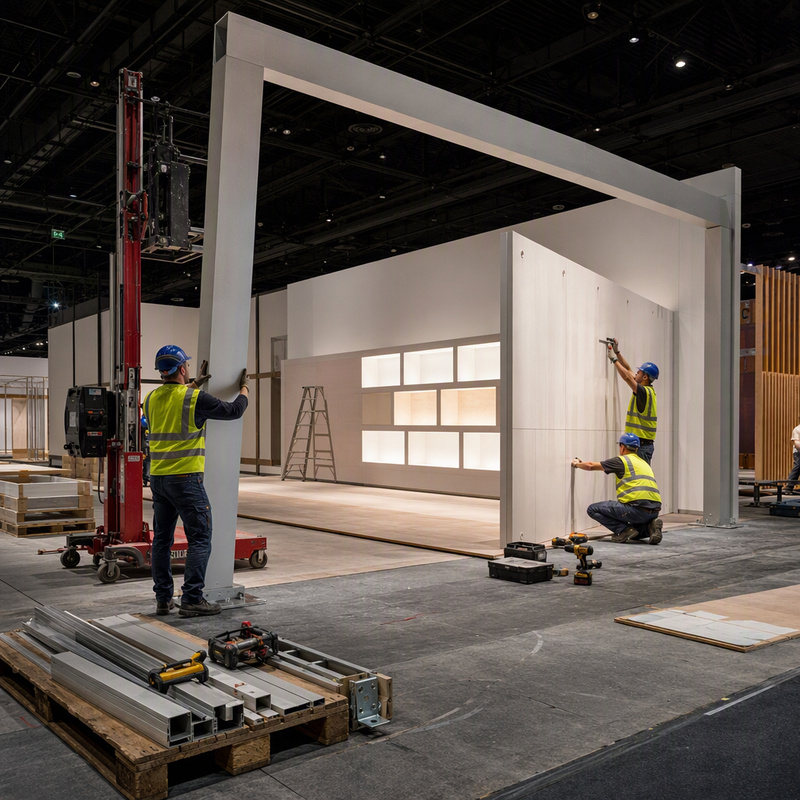
Exhibition Booth Construction: Key Considerations

All Categories

exhibition booth construction

Exhibition booth  construction is a crucial aspect of showcasing products and services at trade shows and exhibitions. For  B2B buyers,  particularly purchasing managers, engineers, and product managers, understanding the  nuances of  booth  construction  can significantly  impact both the effectiveness of their display and the overall  success of their marketing efforts.  This  article  will delve into key considerations such as material  selection,  quality  evaluation, common construction challenges, various construction methods,  and specifications for custom  booths, helping  buyers make informed decisions  for their  next exhibition.Learn more about Steel Structure Buildings.
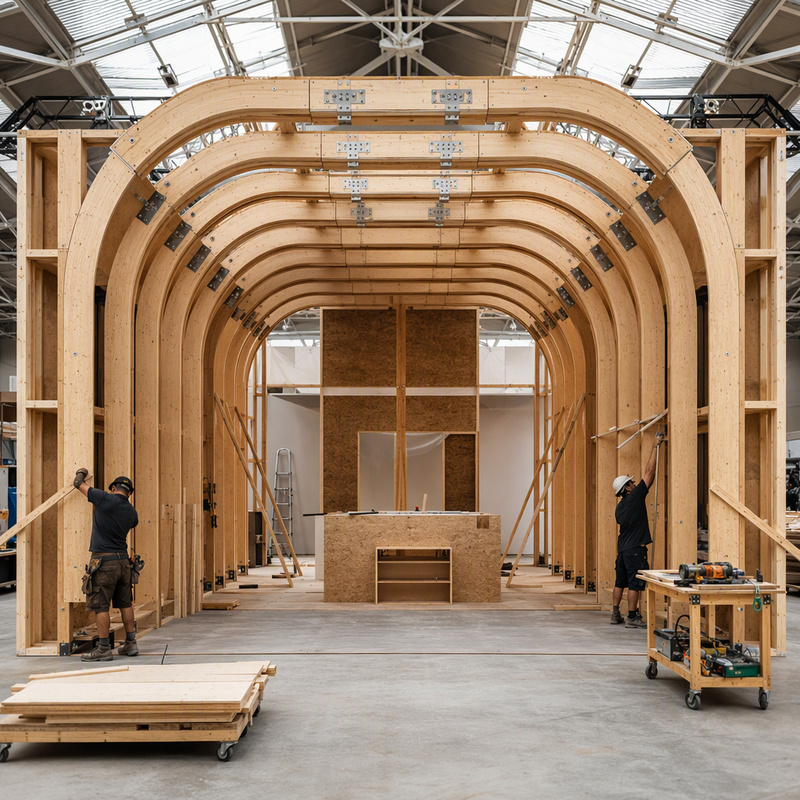
How to Evaluate the Quality of Exhibition Booth Components

How to Evaluate the Quality of Exhibition Booth Components

Quality evaluation  of booth components is vital to ensure that the booth is not only  visually appealing  but also functional and safe. Key components include frames, panels,  and any  modular systems used:

Frames and Support Structures: Inspect the welding and fabrication of the frame. Look for certifications that  verify the structural integrity  and load-bearing capacity. A well-constructed frame will withstand the rigors of transport  and assembly.

Panels: Check for material consistency, surface finish, and  edge treatments. Panels should  be smooth to ensure a professional  appearance and be made of materials that can handle wear  and tear.

Connection Systems: Ensure that the connections between various components  (like  clamps and bolts)  are robust and easy to operate. Poor-quality connections can lead  to instability during exhibitions.

Buyers should request  samples or prototypes before finalizing orders.  This step  helps identify any potential issues with assembly or material performance  in real-world conditions.
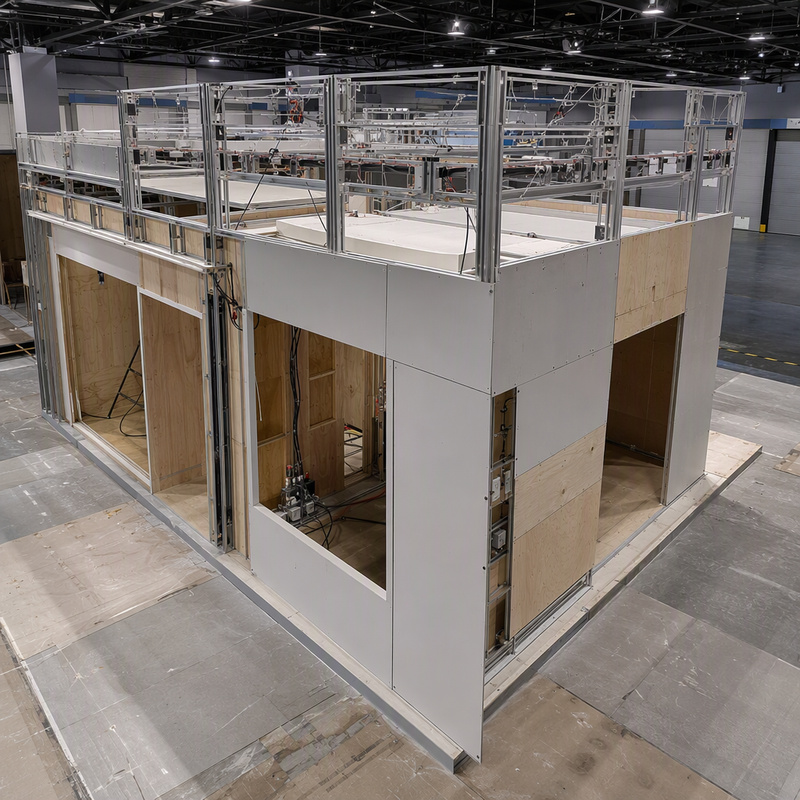
Common Problems in Booth Construction and Their Solutions

Common Problems in Booth Construction and Their Solutions

Even seasoned professionals face challenges during booth construction. Here are  some common issues along with their  solutions:

Misalignment of Components: Components may not fit  together as intended. This can often be resolved by ensuring precise measurements during the design phase and double-checking dimensions before production.

Inadequate Weight Distribution: A poorly balanced booth can be prone to tipping.  Distributing weight evenly across the base and incorporating stabilizers can  mitigate this risk.

Material Failure: Materials  may  not perform as expected under exhibition conditions. Buyers should specify rigorous testing for  materials intended for  high-traffic  areas, including weather resistance if applicable.

Time Constraints:  Last-minute changes can lead to rushed  construction,  resulting in  quality compromises.  To avoid this, maintain open communication with suppliers and allow ample time for adjustments  in the project  timeline.

By proactively addressing  these common issues, buyers can ensure a smoother construction process and a  more successful  exhibition presence.

Comparing Different Booth Construction Methods for Your Needs

Comparing Different Booth Construction Methods for Your Needs

There are various methods for  constructing exhibition booths, each with  its advantages and disadvantages. The primary methods include custom builds, modular systems, and portable displays:

Custom Builds: Tailored specifically for the brand, these  booths provide  the most flexibility in design and aesthetics. However, they can  be more costly and time-consuming to produce. Buyers should budget for  both the initial  setup and potential  reusability in future  exhibitions.

Modular  Systems: These offer  a balance between customization and ease of assembly. Components can be reconfigured for different spaces, making  them versatile  for various exhibitions. Buyers should verify that the modular  system can accommodate their specific branding and product needs.

Portable Displays: Ideal for smaller exhibitions or  events,  these are lightweight and easy to transport.  They generally  offer limited customization but can be effective for straightforward messaging. Buyers should assess how well these displays align with their marketing goals.  Consider Commercial Metal Building Kits for your portable solutions.

Choosing the right method depends  on factors such as budget, space requirements, and the desired impact at the exhibition. Engaging with suppliers early  in the planning process can provide valuable insights into the best options available.

Understanding Specifications for Custom Exhibition Booths

When opting  for custom exhibition booths, understanding specifications is critical  for ensuring that the final product meets  expectations. Key  specifications to consider  include:

Dimensions: Confirm the booth size based on the exhibition space. Accurate measurements are crucial to avoid last-minute adjustments.

Material Thickness: This affects the booth’s durability and appearance. Thicker materials may offer greater  strength but can add to weight and transport costs. Evaluate the trade-offs based on the booth's intended use.

Graphics and Branding Options: Specify the types  of graphics required, including resolution and materials.  High-quality graphics are essential for attracting attention and conveying  brand messages effectively.

Electrical and Lighting Requirements: Ensure  the booth design accommodates electrical  needs, including outlets  and lighting fixtures. This is particularly important for booths showcasing technology or intricate displays.

Buyers should provide detailed technical drawings and specifications during the RFQ process. This not only aids manufacturers in delivering accurate products  but also  helps prevent misunderstandings that can lead to further costs  or delays.

By understanding the nuances of exhibition booth construction  and thoughtfully  considering material selection, quality  evaluation, construction methods,  and specifications, B2B buyers can ensure their exhibition presence is effective, professional, and aligned with their marketing objectives.

Choosing the Right Materials for Exhibition Booth Construction

Selecting the  appropriate materials  for exhibition booth construction is essential for ensuring durability, aesthetics, and functionality. Common materials used include aluminum, wood, fabric, and various  composites.

Aluminum is  favored  for its lightweight properties and  strength, making it easy  to transport and set up while providing structural integrity. Wood offers a classic appearance but  can  be heavier and may require more care in handling. It’s often used for custom builds where a polished look is  desired. Fabric  is excellent for backdrops and banners, as  it can be printed with high-quality graphics. It should be chosen based on its durability and ease of maintenance.

Buyers should consider the booth’s intended use and transportation logistics. For instance, if the  booth needs  to be frequently  assembled and disassembled, materials that  are lightweight and easy to handle will be preferable. Additionally, evaluating the environmental conditions at  the exhibition venue, such as humidity levels, can  inform material selection to prevent  warping or  damage.

Frequently Asked Questions

What exhibition booth services do you provide?

We offer full-service exhibition booth design, steel structure fabrication, CNC precision parts, welding assembly, surface finishing, and on-site installation to deliver turnkey booths for various event sizes.
We use H section steel, box columns, beams, steel trusses, composite plates, and color steel profiled plates, plus purlins and fittings, ensuring strength and durability.
Yes. We provide custom design and fabrication to client specifications, adapting dimensions, layouts, and finishes for unique branding and functional needs.
Lead time varies by complexity and size; typical fabrication and delivery range from 2 to 8 weeks. Exact schedule provided after design approval and order confirmation.
Yes. We provide on-site installation, assembly supervision, and technical support to ensure safe, timely setup and compliance with venue requirements.

Get a Free Quote

Our representative will contact you soon.
Email
Name
Company Name
Message
0/1000

Related product categories

Get a Free Quote

Our representative will contact you soon.
Email
Name
Company Name
Message
0/1000